A sharp escalation in North American trade dynamics unfolded when Donald Trump proposed a baseline 20% tariff on Canadian imports during an address in Ohio, linking the measure directly to border enforcement and automotive deficits. The reaction across financial markets was instantaneous: the Canadian dollar softened, and automotive equities wobbled under the prospect of renewed border friction.
Instead of issuing standard political appeals to historical friendship or proposing retaliatory consumer tariffs on goods like bourbon and motorcycles, Mark Carney delivered an unexpected counter-strategy at the Economic Club of Canada in Toronto. Speaking with the analytical detachment of a former central banker, Carney bypassed diplomatic talking points and targeted the core logistical dependencies of the American industrial base.
The 14 Critical Minerals: Targeting Defense Logistics
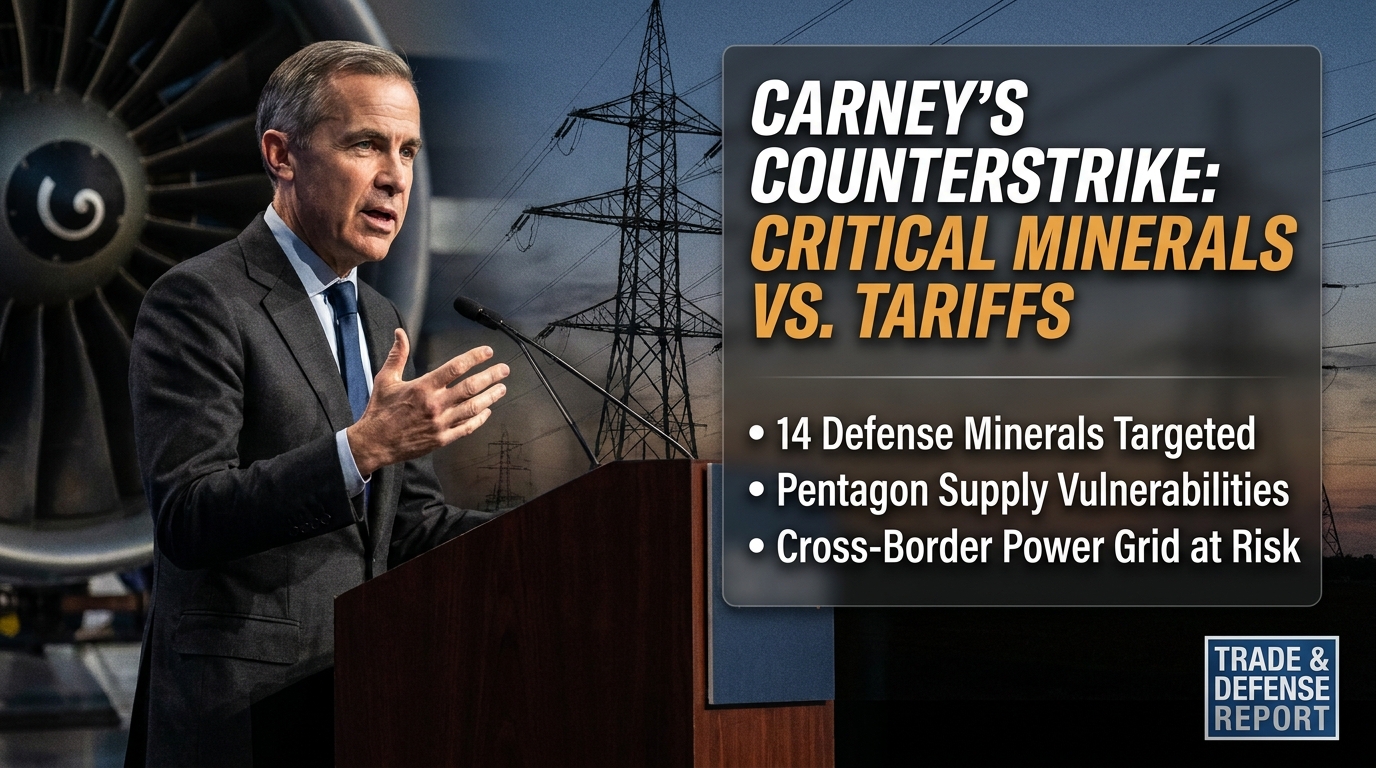
Carney responded to the tariff threat by presenting a precise audit of 14 critical minerals essential to U.S. national security, citing the Pentagon’s own defense logistics assessments:
- High-Grade Aerospace Aluminum: Canada supplies the vast majority of specialized aluminum required for major U.S. defense manufacturing programs, including the F-35 Joint Strike Fighter. Pivoting to alternative domestic production would trigger severe cost spikes and supply bottlenecks.
- Nuclear Energy Dependence: While the United States operates the world’s largest commercial nuclear reactor fleet, it relies heavily on Canada as its primary, secure supplier of raw uranium.
- Essential Industrial Metals: Strategic reserves of cobalt, cesium, and rare earth elements located within the Canadian Shield form the non-negotiable physical ledger of advanced electronics and military hardware.
Carney framed the relationship not as an emotional alliance to be negotiated, but as a reciprocal supply chain ledger where unilateral trade pressure directly threatens American defense readiness.
The Cross-Border Energy Grid
Beyond manufactured goods, the most acute point of economic leverage sits on the regional power grid. The American Northeast—particularly New York and New England—relies on steady imports of Canadian hydroelectric power transmitted from Quebec.
Under a baseline tariff regime, regulatory authorities in Ottawa hold the mechanisms to introduce export levies or transmission surcharges on outbound electricity. During peak winter demand, power price surges would translate directly into immediate utility bill increases for American households and commercial facilities, inflicting political and financial consequences far beyond Washington.
The 2026 USMCA Review and the Sunset Clause
The timing of this confrontation aligns directly with positioning ahead of the mandatory 2026 joint review of the United States-Mexico-Canada Agreement (USMCA). Under the pact’s sunset clause, all three signatories must formally confirm their commitment to the agreement or initiate a 16-year timeline toward termination.
While Washington’s tariff rhetoric was calculated to secure preemptive concessions, the response demonstrated that mid-tier economies can counter economic pressure by identifying irreplaceable strategic dependencies rather than engaging in broad retaliatory wars.
Economic Fallout and Persistent Inflation
If broad baseline tariffs take effect, the downstream consequences will reach well beyond headline import numbers:
- Embedded Inflation: Cost increases in raw materials, freight, and electricity will feed through to durable consumer goods, autos, and technological hardware.
- Capital Market Risks: Retaliatory cycles targeting basic industrial inputs undermine institutional stability, increasing portfolio volatility for fixed-income assets and industrial equities.
- Erosion of North American Integration: Disrupting decades of interconnected logistics will weaken continental manufacturing resilience during a period of fierce global geopolitical competition.