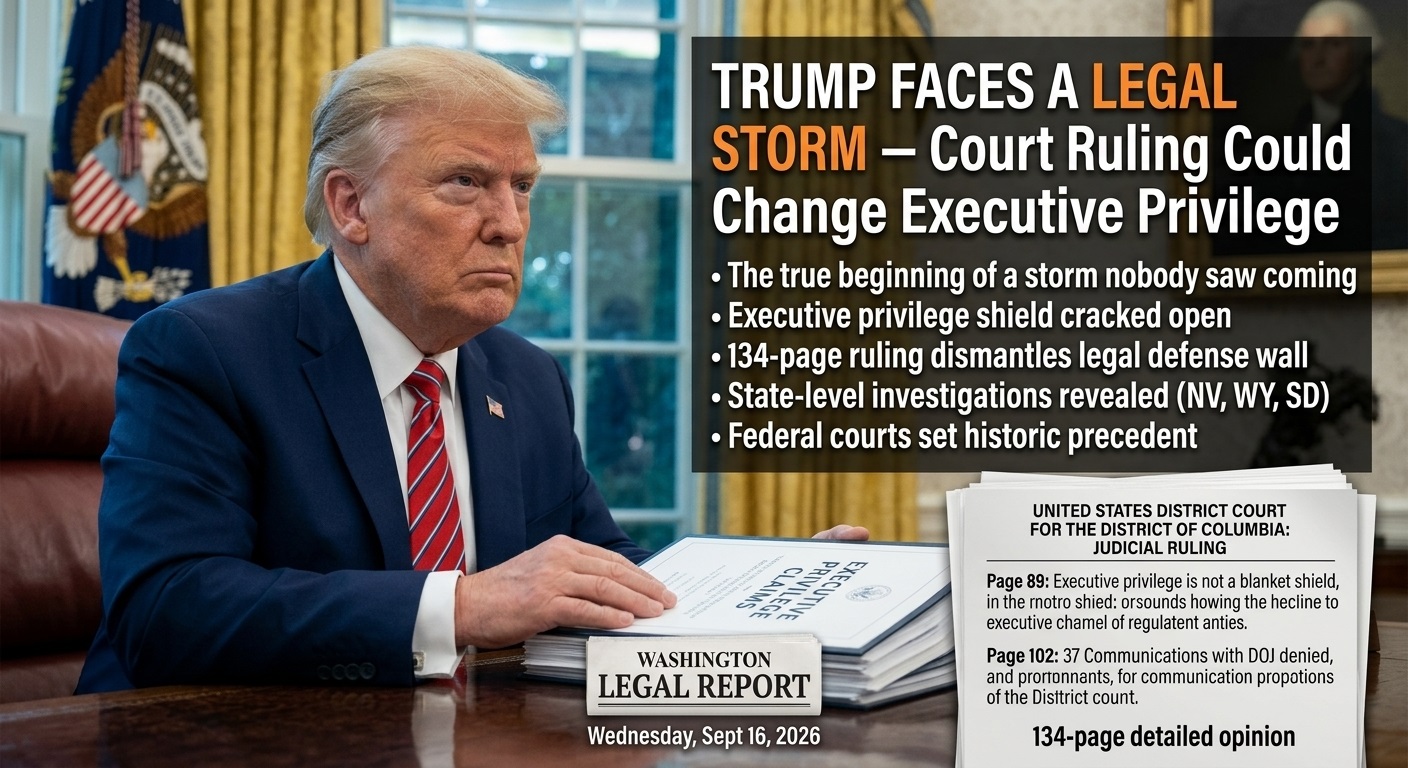
ashington experienced a profound legal and political shock when a 134-page ruling dismantled the legal shield of executive privilege. While national attention was fixed on election returns and shifting balances of power, the decision established a major precedent that redefines presidential authority and congressional oversight.
Federal Judge Marcus Richardson issued an extensive, meticulously cited opinion that struck at the core of the defense strategy. Rather than issuing a standard procedural denial, the court made it clear that executive confidentiality cannot serve as a blanket immunity against investigations into potential criminal conduct.
Cracking the Executive Shield
Presidents from Richard Nixon to Donald Trump have relied heavily on executive privilege to preserve confidential internal communications. However, this ruling establishes a firm constitutional boundary.
- No Blanket Immunity for Crimes: The court affirmed that internal confidentiality protections cannot be deployed to conceal evidence of potential criminal activity.
- Dismissal of DOJ Immunity Claims: The opinion systematically rejected 37 separate attempts to assert absolute privilege over communications between defense counsel and the Department of Justice.
- Scrutiny of Witness Payments: The judge highlighted $4.7 million in legal fees paid to uncooperative witnesses, signaling judicial concern over potential witness tampering.
Subpoenas and Compelled Testimony
The ruling breaks open a long-standing defense strategy of procedural delays and recurring appeals. Because sworn depositions had previously been taken under seal, this decision sets a precedent for enforcing testimony on the public record.
Key former White House officials—including former Chief of Staff Mark Holloway, Communications Director Sarah Chen, and White House Counsel David Martinez—face a binding deadline to comply with subpoenas or risk contempt of court proceedings. Furthermore, the court record revealed ongoing state-level investigative threads stretching into states like Nevada, Wyoming, and South Dakota, demonstrating that the inquiry extends far beyond traditional battleground jurisdictions.
Constitutional Debate: Presidential Candor vs. Accountability
Supporters of the administration argue that narrowing executive privilege undermines the presidency. Without confidential counsel, future executives may hesitate to seek frank advice from top aides, hampering effective governance.
However, legal analysts emphasize that the decision does not eliminate privilege entirely. Ordinary policy debates, national security assessments, and cabinet deliberations remain protected. The privilege collapses only when confronted with documented evidence of wrongdoing, established through phone records, internal correspondence, and corroborating witness accounts.
Long-Term Impact on Presidential Power
The ruling marks an institutional turning point with implications that reach well beyond any single administration. By reinforcing the principle that executive authority requires clear legal boundaries, the decision strengthens congressional oversight and signals that future presidents—regardless of party—will operate under far stricter standards of executive transparency.